Stay tuned
To learn more about the latest news of FANGBEI.

To learn more about the latest news of FANGBEI.
2026-08-15
Choosing the right connector is only the first step in making a reliable electrical connection. The actual performance of a wiring system also depends on conductor size, insulation type, current requirements, environmental conditions, contact pressure and installation method. Whether the application involves telecommunications, automotive wiring, batteries, speakers or low-voltage equipment, understanding how to use wire connectors correctly can help reduce loose connections, corrosion and premature electrical failures.
For telecommunications applications, K1, K2 and K3 connectors provide a useful example of how connector design changes according to wire configuration and application requirements. Our previous article, Understanding K1, K2, K3 Connectors: A Quick Guide, explains the basic construction, functions and applications of these compact wire connectors.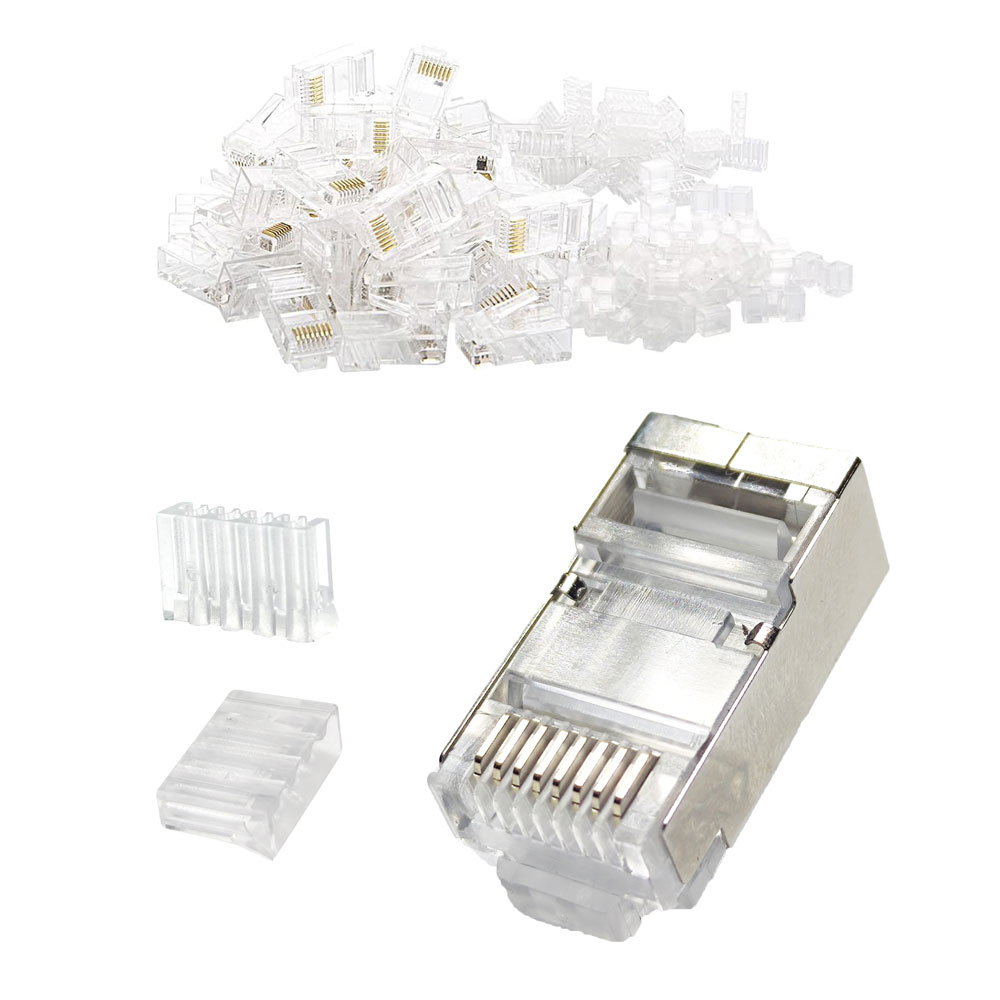
A wire splice connector is a component used to join two or more electrical conductors while maintaining an electrical connection and providing mechanical support. Depending on the design, a splice connector may use crimping, insulation displacement, screw terminals, spring contacts, compression or other connection technologies.
The most suitable connector depends on the wire type and application. Solid copper telecommunications wires, stranded automotive wires and high-current battery cables have very different mechanical and electrical requirements.
For example, an IDC-style connector is commonly used for certain telecommunications applications because its internal contact can establish electrical contact without requiring the same stripping and crimping process used by other connector types. By contrast, a high-current battery connection normally requires a connector capable of handling substantially higher current and mechanical loads.
Therefore, “wire connector” is a broad product category rather than a single standardized connection method.
The first step in learning how to use wire connectors is identifying the wire specification.
Before making a connection, determine:
Conductor material
Solid or stranded construction
Wire gauge or conductor diameter
Insulation diameter
Number of conductors
Operating voltage
Expected current
Indoor or outdoor environment
Temperature and vibration conditions
The connector should then be selected according to the manufacturer's specified wire range.
For a crimp connector, the conductor is normally stripped to the specified length before insertion. The correct Crimping Tool should be used to compress the terminal around the conductor. A proper crimp should hold the conductor securely without cutting or excessively deforming the wire.
For an IDC connector, the wire is positioned inside the connector and the internal contact element penetrates the insulation to establish electrical contact. The wire must be fully seated and the connector must be actuated according to its design.
The important principle is that installation force, wire dimensions and contact geometry must work together. Simply inserting a wire into a connector does not guarantee a reliable electrical connection.
Heat shrink wire connectors combine electrical connection and environmental protection in a single component. They are commonly used where a splice needs additional resistance to moisture, vibration or mechanical movement.
A typical heat-shrink splice consists of a conductive metal barrel surrounded by a heat-shrinkable insulating sleeve. After the conductors are inserted and crimped, controlled heat is applied to shrink the outer material around the connection.
The resulting assembly can provide several functions:
Mechanical insulation around the splice
Protection against moisture and contamination
Additional Strain Relief
Improved resistance to environmental exposure
However, the connector must be matched to the wire gauge and insulation diameter. Excessive heating can damage surrounding insulation or components, while insufficient heating may prevent the sleeve from properly conforming to the connection.
For outdoor, marine or automotive applications, the connector's sealing construction and temperature rating should be checked carefully rather than assuming that every heat-shrink connector is automatically waterproof.
The requirements for a connector automotive electrical application are generally more demanding than those of a stationary indoor wiring system.
Automotive wiring can be exposed to:
Continuous vibration
Temperature cycling
Moisture and condensation
Oil and chemical exposure
Mechanical movement
Limited installation space
Electrical loads that change rapidly
A suitable automotive connector therefore needs more than basic conductivity. Terminal retention, vibration resistance, insulation performance, contact stability and environmental sealing may all affect long-term reliability.
For under-hood applications, temperature resistance becomes particularly important. Connectors located near engines, exhaust components or other heat sources must be selected according to the actual operating temperature rather than the normal cabin temperature.
This is also why a general-purpose wire connector should not automatically be substituted for an automotive connector simply because the wire diameter appears compatible.
Battery wire connectors are another application where connector selection must be based on electrical load.
Battery systems can deliver significant current, especially during starting, charging or high-power operation. A connector that works adequately for a low-current signal circuit may overheat if it is used in a high-current battery circuit.
When selecting a battery connector, engineers should evaluate:
Maximum continuous current
Peak current
Conductor gauge
Contact resistance
Terminal material
Connection method
Temperature rise
Mechanical retention
Environmental protection
Low contact resistance is particularly important in high-current systems. Even a small increase in resistance can generate heat according to the relationship between current and resistance.
For this reason, battery connections should use connectors specifically rated for the intended current and cable size.
Low voltage wire connectors are widely used in control systems, lighting, sensors, communication equipment, security systems and other electrical applications.
Although low-voltage circuits generally operate at lower voltages than power distribution systems, connector quality remains important. A poor connection can introduce contact resistance, intermittent signals or voltage drops.
Signal wiring may also be more sensitive to electrical noise than simple power circuits. In these applications, connector selection should consider not only current capacity but also signal integrity, shielding requirements, mechanical stability and installation environment.
For telecom and communication wiring, compact connectors such as K1, K2 and K3 designs can provide an efficient solution when their wire specifications and connection configurations match the application.
When considering how to connect speaker wire connectors, the first requirement is to identify the speaker terminal and the connector type being used.
Speaker wiring generally involves positive and negative conductors, so polarity should be maintained consistently throughout the system. Reversing the polarity of one speaker can affect the phase relationship between speakers and may reduce overall acoustic performance.
For screw terminals or spring terminals, the exposed conductor should be prepared according to the terminal design and secured firmly. For crimp-style speaker terminals, the terminal should match the wire gauge and be compressed with an appropriate tool.
The connection should be mechanically secure without excessive exposed conductor outside the insulating housing.
For higher-power audio systems, connector current capacity and contact resistance should also be considered. A connector designed for small signal wires should not automatically be used for high-power speaker wiring.
Different applications require different connector characteristics. A useful selection process is to begin with the electrical parameters and then evaluate the mechanical and environmental requirements.
| Application | Important Considerations | Typical Connector Requirements |
|---|---|---|
| Telecommunications | Wire diameter, insulation, compact installation | IDC or telecom splice connector |
| Automotive | Vibration, temperature, moisture, current | Automotive-rated connector |
| Battery | Continuous and peak current, heat | High-current connector |
| Low-voltage control | Signal integrity, wire size | Compact low-voltage connector |
| Speaker wiring | Polarity, wire gauge, current | Terminal or crimp connector |
| Outdoor wiring | Moisture and environmental exposure | Sealed or heat-shrink connector |
This comparison demonstrates why there is no universal “best” wire connector. The correct component is the one whose electrical, mechanical and environmental specifications match the actual application.
Many wiring failures are caused not by the connector itself but by incorrect installation.
One common mistake is using the wrong connector size. If the conductor is too small for the contact, the connection may be mechanically weak. If the conductor is too large, the connector may not close or crimp correctly.
Another problem is excessive stripping. Too much exposed conductor can reduce insulation protection and increase the risk of accidental contact.
Improper crimping is another frequent issue. A crimp that is too loose may increase contact resistance, while excessive crimp force can damage the conductor or terminal.
Environmental conditions are also often overlooked. A connector installed in a dry indoor enclosure may not be appropriate for an area exposed to water, vibration, oil or temperature fluctuations.
For distributors, OEM manufacturers and electrical contractors, connector quality is closely related to production consistency.
A professional connector manufacturer should control critical dimensions such as housing geometry, contact position, terminal dimensions and material properties. For IDC connectors, the relationship between the insulation displacement contact and the specified conductor range is especially important.
For high-volume applications, buyers should also evaluate batch consistency, electrical testing, mechanical retention, material traceability and packaging.
When developing a customized connector, providing the manufacturer with the wire specification, connection configuration, application environment and expected electrical load can make the engineering process considerably more efficient.
Understanding how to use wire connectors requires more than knowing how to join two wires. A reliable connection depends on the relationship between the conductor, insulation, contact structure, connector material and installation method.
Wire splice connectors are suitable for specific wire-joining applications, while heat shrink wire connectors provide additional insulation and environmental protection. Automotive and battery systems require careful consideration of vibration, temperature and current capacity, while low voltage wire connectors and speaker connectors must be selected according to their respective electrical and mechanical requirements.
For telecommunications applications, K1, K2 and K3 connectors demonstrate how connector configuration can be optimized for different wire-splicing requirements. For a detailed introduction to these products, read Understanding K1, K2, K3 Connectors: A Quick Guide.
Selecting a connector according to actual wire specifications and operating conditions—not simply by appearance or model name—is the foundation of a reliable electrical connection.
Fangbei, a premier manufacturer specializing in network connectors, terminals, electronic components, and cutting-edge network tools.

+86 769 8127 1686 +86 186 8105 2977
186 8105 2977