Stay tuned
To learn more about the latest news of FANGBEI.


To learn more about the latest news of FANGBEI.
2026-10-10
Network performance is often limited not by the cable or the switch, but by the connector at the end of the run. A correctly chosen RJ45 plug, Keystone Jack, or field-terminated connector keeps signal integrity intact; a poor one introduces return loss, crosstalk, and intermittent faults that are frustrating to diagnose. This guide covers the main RJ45 Connector types and how to match them to real installation conditions.
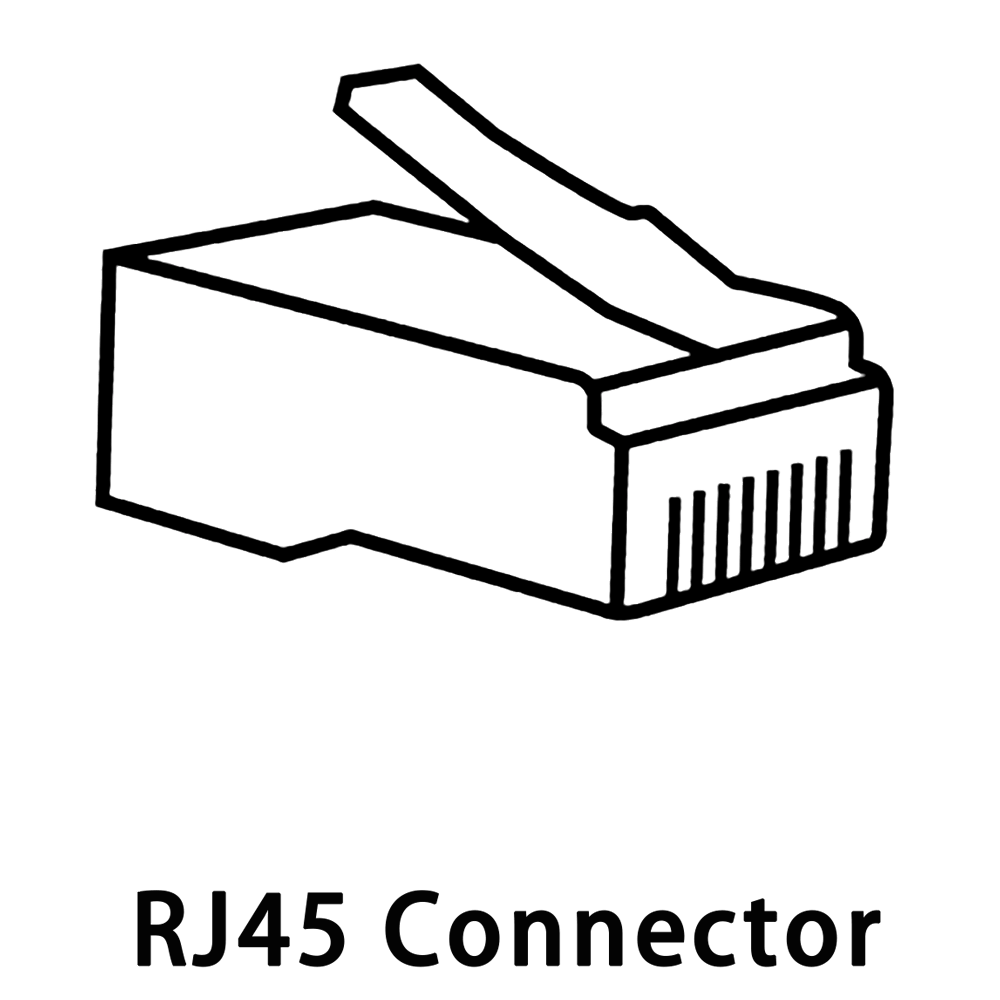
An RJ45 connector is the standard 8-position, 8-contact (8P8C) interface used for twisted-pair Ethernet. Each of the eight conductors is pressed into a dedicated contact, and the wire sequence follows the T568A or T568B color code standard.
The connector has to do more than make electrical contact. Its contacts must maintain consistent impedance, its housing must hold the pairs at the correct spacing, and the strain relief must protect the termination from pulling and bending.
Standard RJ45 plugs are used to terminate stranded Patch Cords. They are available in unshielded and shielded versions, and in variants designed for different cable jacket diameters. The contacts are gold-plated to resist corrosion over time.
Tool-less connectors allow a cable to be terminated in the field without a crimping tool. They are useful for maintenance and on-site repairs where a full tool kit is not available, though they are generally reserved for lower-density work than factory-terminated plugs.
Where a modular plug terminates a flexible patch cord, a keystone jack terminates the solid cable at a wall outlet or Patch Panel. The jack uses insulation displacement contacts, which are more reliable for permanent cabling than crimp-on plugs on solid conductors.
Shielded RJ45 connectors include a metal shell that connects to the cable's foil or braid. They are used when the cabling system is shielded, and they must be paired with shielded jacks and grounding to be effective.
One of the most common mistakes is pairing a high-category cable with a low-category connector. The weakest link defines the channel, so a Cat6a cable terminated with a Cat5e-rated plug will never certify as Cat6a.
Conductor type also matters. Solid-conductor cable should be terminated into IDC-style jacks, while stranded patch cable is terminated with crimp-on plugs. Using the wrong combination leads to unreliable contact and premature failure.
Plating. Gold plating protects the contact surface from oxidation. Fifty micron-inch plating is typical for standard applications, while higher densities and frequent mating benefit from thicker plating.
Shielding. Choose shielded connectors only when the cable is shielded. An unshielded connector on a shielded cable leaves the shield unterminated and can actually worsen performance.
Category rating. Match the connector's rated category to the cable's. Cat6 and Cat6a connectors have tighter tolerances to control crosstalk at higher frequencies.
Environment. Outdoor, industrial, and high-vibration installations call for ruggedized or sealed connectors that resist moisture, dust, and mechanical stress.
Even a high-quality connector fails if it is installed carelessly. The pairs should remain twisted up to the point of termination, the jacket should extend into the strain relief, and the cable should not be bent beyond its minimum radius. A single over-untwisted pair can push a link past its return loss limit and fail certification.
Testing every link with a certification tester before handover is the only reliable way to confirm that termination was done correctly.
Choosing the right RJ45 connector comes down to matching category, conductor type, shielding, and environmental protection to the needs of each link. Keep every component in the channel at the same performance level, terminate carefully, and test the finished link. These three steps prevent the majority of network faults caused by connectors.
Sourcing connectors from a manufacturer that controls tolerances and plating quality gives you a predictable, certifiable system from end to end.
Fangbei, a premier manufacturer specializing in network connectors, terminals, electronic components, and cutting-edge network tools.

+86 769 8127 1686 +86 186 8105 2977
186 8105 2977